Concrete retaining walls in Quincy MA - a wall that drains and holds your slope
Soil pushing over an old wall or washing down a slope? We pour a reinforced concrete wall with a drain you can keep clear.
- Fully licensed and insured.
- Free in-person estimates.
- Expect a reply within 1 business day.
Is a poured concrete retaining wall right for your yard?
A concrete retaining wall in Quincy is a wall we pour in place, with rebar, the steel bars that let concrete bend without breaking, running up through an upright stem that stands on a wide footing. It holds your slope back with its own weight, the weight of the soil resting on that footing and the strength of the steel.
Most calls start with a slope that won't stay put, an old timber or block wall that's leaning out, or a yard you'd like to level so you can actually use it. What moves the price is the wall's height and length, how easily we can get forms and a concrete truck to the spot, what the ground underneath is like and what sits above it, whether that's a driveway or a concrete patio. The schedule mostly turns on the weather around pour day and on whether the site needs any filings sorted out first, and the written estimate I give you after measuring spells out what's included.
How can you tell a slope or an old wall needs a new retaining wall?
The top leans outward
If the top of your wall tips toward the yard below, the soil behind it is pushing harder than the wall can take, and trapped water is usually part of that push. A leaning wall rarely straightens itself, so waiting usually means more dirt to haul out and a bigger wall to pour when it finally goes.
Dirt washing down the slope
When every heavy rain leaves a fan of mud on your lawn, walk or driveway, the slope is moving a little at a time. Left alone, it can start undercutting whatever sits at the top, like a fence, a patio or a corner of the driveway.
Water seeping through the face
Damp streaks, a white crust or water trickling out of cracks mean water is collecting behind the wall instead of draining away. That water adds weight the wall wasn't built to hold, which is how a small crack turns into a bulge over a few winters.
How we build a concrete retaining wall
Water building up behind a wall is what usually causes trouble, so before anything else I look at where your water comes from and plan how it will drain and how you'll keep that drain clear. If the site raises questions about design or filings, we work those out before we schedule anything. Then our crew digs out for the footing, the wide base the wall stands on, packs the ground under it, sets the rebar and builds the forms, the molds that shape the wall. We pour the footing and the stem, set the drain behind the wall, backfill with stone that lets water through, and give the concrete time to cure, which means letting it gain strength before the full weight of the soil leans on it. If you have to trim the budget, I'll steer you toward a plainer face before I'll skimp on the footing or the drain, because nobody sees those once the dirt goes back, and they're what decide whether the wall is still standing straight years from now.
A wall is often the start of a bigger plan, because it's what turns a slope into flat ground you can use. Plenty of people want that ground for one of our concrete pool decks, and when the wall is cut into a hill for a garage or workshop, we take care of the concrete floor installation inside it as well.
Plain formed face
This is the smooth or lightly textured face the forms leave behind, and it suits most yard walls where you want the strength without paying for looks. It also leaves more of the budget for the drain and the footing, which is where I'd rather see your money go.
Textured or patterned face
Liners inside the forms can press a stone or board pattern into the face, which suits a wall that faces the house or a patio you'll sit on. It costs more and takes more care at the pour, so I'd save it for a wall you'll look at every day.
Get a written estimate for your retaining wall
We'll reply within one business day and set a time for me to come out, look at your slope and measure. The estimate is free, in writing with what's included spelled out, and you're under no obligation.
(617) 691-5008- Based in
- Quincy, MA 02169
- Hours
- Mon–Fri: 8 AM–11 PM, Sat–Sun: 7 AM–11 PM
What happens after you call about a retaining wall in Quincy?
Here's how a retaining wall job runs from your first call to the day we pull the forms, and who you'll deal with at each step.
Call or send the form
Reach us at (617) 691-5008 or through the form, and we'll set a time for me to come out. Have the wall's location, its rough length and height, what sits above it and whether your lot is near the shore ready.
Walk the slope with me
I look at the site, measure, check where the water runs and talk through what you want the wall to do. You get a written estimate that spells out what's included, so you know what you're paying for before you decide.
Settle filings and the date
Once any filings are settled, we pick a pour date with the forecast in mind. Pouring in bad weather can leave weak concrete, so we'd rather wait a few days than rush it.
Pour, backfill and walk through
Our crew does the prep and the pour, sets the drain and backfills once the wall is ready to take the load. Then I walk you through caring for the new concrete and keeping that drain clear.
Why Quincy homeowners call Cornerstone Quincy Concrete for retaining walls
I write it and run it
I'm the one who comes out to look at your slope and write the estimate, and I run the work with my crew of finishers and laborers. That means the person who promised you a drain you can clean is the one watching it go in.
Licensed and insured in Massachusetts
Massachusetts requires a contractor working on an owner-occupied home of one to four units to be registered as a Home Improvement Contractor, and on a one- or two-family home a licensed construction supervisor or registered design professional has to oversee the work. We're fully licensed and insured, and those are fair questions to put to anyone you're comparing.
In business since 2017
I came to concrete after another line of work and learned it on a finishing crew under people who'd done it their whole lives, and I've run this business since 2017, nine years now. I'd rather explain why a wall needs what it needs than have you sign for something you don't understand.
On a retaining wall, the money that matters goes into the parts that end up buried. Set up a visit and I'll walk the slope with you and show you where your water goes.
Retaining walls and yard work near the water in Quincy
Some Quincy lots sit on land that floods in coastal storms, and a retaining wall there can bring a wetlands filing before any digging starts, as it did for a new home with a retaining wall on that kind of ground in the city. Under the state Wetlands Protection Act, anyone who plans to fill, remove, dredge or otherwise alter a protected area has to file a written Notice of Intent, so if you're near the shore or near wetlands, bring it up early. Whether a particular wall needs a building permit or wetlands review depends on the site, so I check with the local building office before we set a date, and when a permit is needed we pull it ourselves rather than hand you the paperwork.
We're based in Quincy and work across the cities around it, and plenty of yards here step up or down from the street, often behind an old timber or block wall that's finally giving up. We see the same tired walls and sloped backyards on jobs in Milton and Braintree, and the fix is the same, a solid footing and a drain somebody can actually reach.
Questions about retaining walls in Quincy
Is a poured concrete or block retaining wall better for my yard in Quincy?
Poured concrete is usually the better pick when the wall will carry a heavy load like a driveway or parked cars above it, or when a block wall's reinforcement would have to run back into a neighbor's property, according to one materials guide. Poured walls on a footing do best on solid ground that bears weight well. For a low garden edge with nothing heavy on top, block can be a fair choice, and I'll tell you which way I'd go after seeing your slope.
How much does a concrete retaining wall cost near Quincy, MA?
A retaining wall in the Boston area usually costs about $30 to $95 per square foot of wall face, installed, so a taller or longer wall climbs fast because you pay for every square foot of face. Poured walls need forms and skilled placement, tight access for the truck and crew adds cost, and ground that settles may need piles under the footing, which raises the price a lot. My written estimate after the site visit gives you the figure for your wall with what's included spelled out.
What causes a retaining wall to fail?
Poor drainage is by far the most common reason a retaining wall doesn't hold up, according to a national design guide. Plain weep holes, the small openings through the face, tend to clog over the years, and drains that can be cleaned out are more reliable, so ask any contractor how water will leave the soil behind your wall. That's why drainage is the first thing I plan, as described above.
Who pulls the permit for a retaining wall in Massachusetts?
Your contractor should, because state guidance says the registered contractor agrees to pull the building permit and any other permits the job needs. If you apply for the permit yourself, you may not be eligible for compensation from the state's Guaranty Fund, so it's worth leaving that to the contractor.
How much can a contractor ask for up front on a retaining wall in Massachusetts?
By state law, a contractor can't collect more than one-third of the contract price in advance unless special-order materials are needed. If someone asks for more than that before work starts, ask why before you sign.
What is the best way to plan a retaining wall so it lasts?
Get the design right the first time, because repairing or changing a poured wall later can be disruptive. Settle how tall and long it needs to be, what will sit above it and where the water will go before the forms go up, and I'll walk through each of those with you on the estimate visit.
Concrete work that often goes with a wall
Concrete floor installation
If you're cutting into a slope to make room for a garage, shed or workshop, you'll need a level floor poured once the wall holds the ground back.
Concrete pool decks
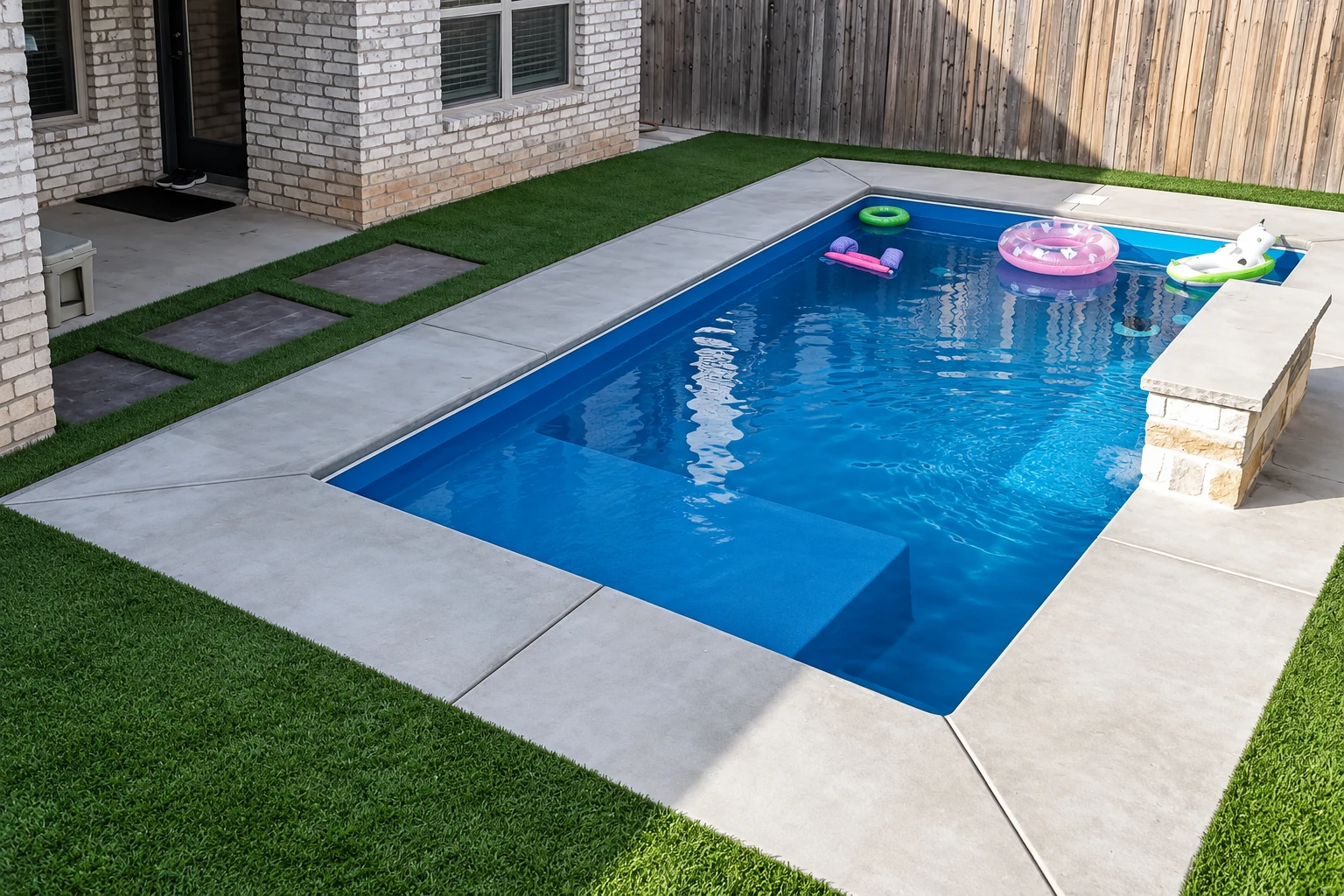
A wall can turn a sloped backyard into flat ground, and a pool deck there gives you a slip-resistant surface that drains away from the water.
Cities we serve around Quincy
Cornerstone Quincy Concrete is based in Quincy, Massachusetts, and builds retaining walls across the cities around it. Weymouth and Randolph are two of the 12 cities with their own page here, and we work in other nearby cities as well.
Quincy, MA
Get your retaining wall measured and priced
On the first visit I'll show you where the water on your slope goes, and that's where every good wall starts.