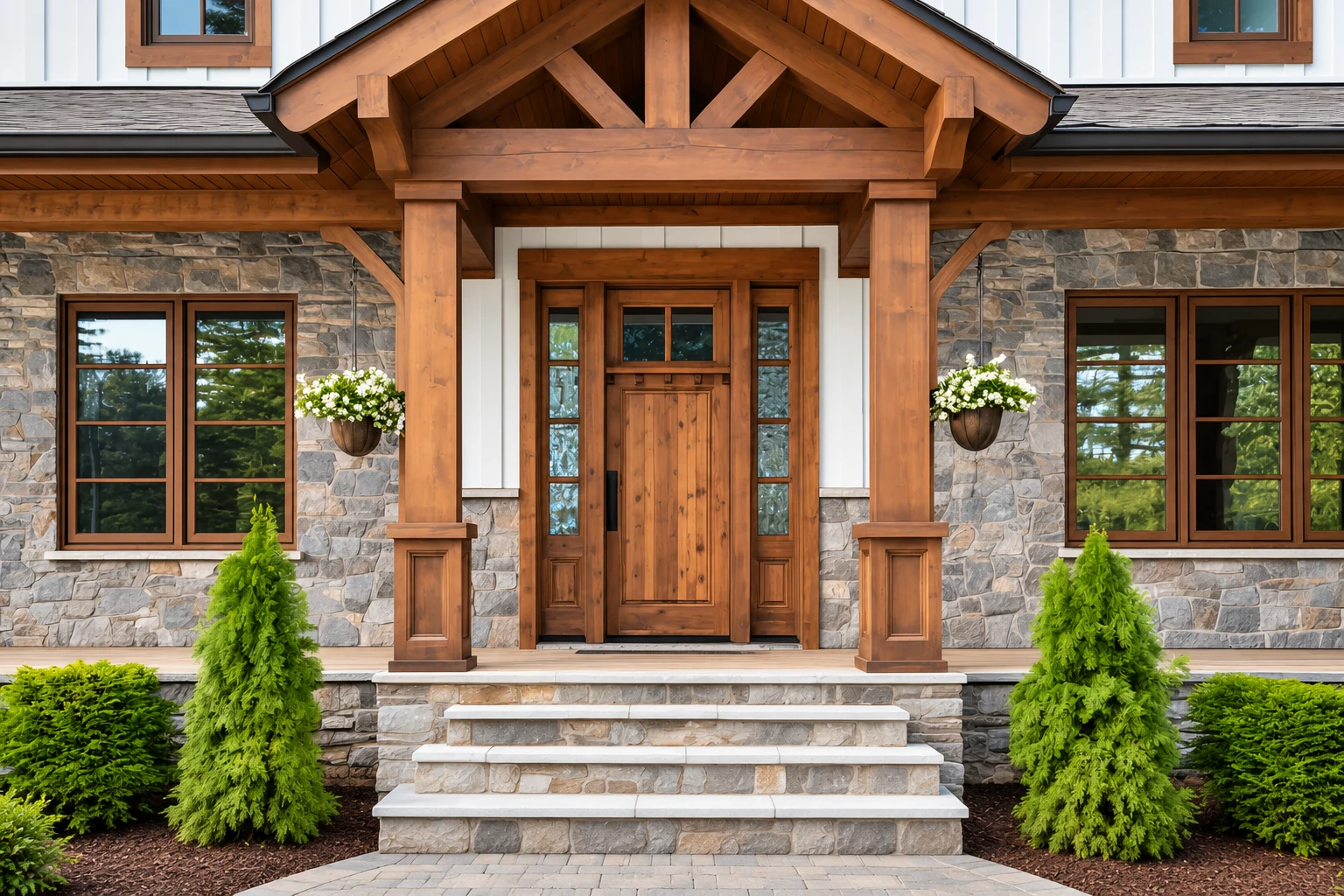
Concrete steps construction in Quincy MA - a way in that stays firm and level
Front steps cracked, tilting or pulling away from the house? We build new poured or precast steps that sit solid on what's under them.
- Fully licensed and insured.
- Free in-person estimates.
- Expect a reply within 1 business day.
Should your new front steps in Quincy be poured or precast?
Concrete steps construction in Quincy means building a new set of entry steps for your house, either poured in place or assembled from hollow precast pieces, so you have a firm, even way in and out.
Most people call us when the old steps have started to tilt, crumble or pull away from the door, and the first thing they ask is whether to pour new ones or set precast. That choice moves the price more than anything else, along with how many steps you need, how wide they are, whether there's a landing, what the steps will rest on and whether the old set has to come out first. The schedule mostly turns on the weather, since we pick the pour date around the forecast, and on the curing time before the new steps can take real use. When I come out, the written estimate lists each of those pieces so you can see what you're paying for.
How do you know your concrete steps need replacing?
Steps pulling from the house
A gap opening between the top step and the door threshold usually means the steps are settling on their own while the house stays put, often because the dirt under them was never packed. That gap tends to grow every winter, and it lets water in right against your foundation wall.
Treads tilting or holding water
If a step tips toward the yard or water sits on it after rain, the ground under that side has dropped. Standing water on a tread turns to ice, so this one is a safety problem before it's a looks problem.
Cracks and broken edges
Hairline cracks are common in concrete and often just cosmetic, but cracks that keep widening, corners breaking off or a top that flakes away mean the step is coming apart. Patches rarely hold for long once pieces loosen, so waiting usually means paying for repairs and then for new steps anyway.
How we handle concrete steps construction
I start by looking at what your new steps will rest on, because that decides how they're built. Steps can sit on the ground, tie into a landing or your house foundation, or span like a stair between supports, and the base and footing under them follow from that choice. Once we know that, I help you pick poured or precast based on your budget and the size you need. For poured steps, our crew digs out and packs the base, builds the forms, sets rebar, which is the steel inside that holds the concrete together if it cracks, and pours. We give the treads a broom finish, a light ridged texture so your shoes grip when they're wet, then keep the concrete covered and damp while it cures, the slow hardening that gives it strength. For precast, we prepare the same solid base and set the pieces level against the house. If the budget gets tight, I'd rather you skip a fancier finish than skimp on the base, because the base is the part nobody sees on day one and the part that decides whether your steps are still level years from now.
Steps are often part of bigger work. If you're putting up an addition on a new slab foundation or need a full foundation installation, we plan the entry steps along with it so they tie in at the right height instead of being tacked on at the end.
Precast steps
Precast steps are hollow pieces made off site and set in place, and they usually cost less than poured because they're lighter and quicker to assemble. They suit a standard doorway and a tighter budget, as long as the base under them is done right.
Poured-in-place steps
Poured steps are formed and filled right at your door, so they can be built to a much wider range of sizes, with a landing if you want one. They suit an odd-sized entry or a wider set where a stock precast unit won't fit.
Get a written price for your new concrete steps
Send photos of your current steps, how many you want and whether you live in the house. We'll reply within one business day to set a visit, and the free written estimate comes with no obligation.
(617) 691-5008- Based in
- Quincy, MA 02169
- Hours
- Mon–Fri: 8 AM–11 PM, Sat–Sun: 7 AM–11 PM
What happens after you call about new steps in Quincy?
Here's how a steps job runs from your first call to the day you can use them, and who you'll be dealing with along the way.
Call or send the form
Tell us about your steps and we'll set a time for me to come out. Photos of the old set help me know what I'm walking into.
I measure and write it up
I look at what the steps will rest on, measure the entry and talk through poured or precast with you. You get a written estimate that spells out everything included, so you can see exactly what you'd be paying for.
We prep and pour
We pick a pour date with the forecast in mind, because a hot afternoon or a downpour can leave a weak, dusty top. Our crew handles the tear-out, the base, the forms and the pour.
I walk you through care
When the forms come off, I show you how to treat the new steps while they cure. Most people never get told this part, and it's where a lot of new concrete gets damaged early.
Why Quincy homeowners call Cornerstone Quincy Concrete for steps
The owner writes your estimate
I'm the one who comes out, looks at your entry and writes the estimate, and I run the job with my own crew of finishers and laborers. The person who made the plan with you is the person standing there on pour day.
In business since 2017
I learned the trade on a finishing crew and started this business in 2017, and steps are one of the jobs we're best known for, mostly for homeowners around Quincy. That's years of seeing which steps hold up, which ones settle and why.
Fully licensed and insured, every job
We're fully licensed and insured, so you're not carrying the risk if something goes wrong on your property while we work. Ask any contractor you're comparing for the same, along with the state rules covered below.
If you want someone to explain your steps plainly before you decide anything, contact us and I'll come out and walk you through it.
Concrete steps, landings and foundations in Quincy
Massachusetts says whether a job like this needs a building permit depends on the specifics, and it points owners to the local building official, so we check with the building office before we set a date. The state also says that on most existing one- to four-family homes where the owner lives, a licensed construction supervisor or a registered design professional has to oversee construction, and any contractor bidding on that kind of home has to register with the state as a Home Improvement Contractor. That registration rule doesn't cover new construction or an investment, vacation or second home, which is why we ask whether you live in the house.
Quincy sits on Boston Harbor and Quincy Bay, with flood-prone areas around Marina Bay, Wollaston Beach and Germantown, so on jobs there I pay extra attention to where water runs at your door and what the steps will rest on. We're based in Quincy and work across the cities around it, and we bring the same care to entries near the water in Weymouth and to older houses in Braintree.
Questions about concrete steps in Quincy
How much do concrete steps cost in Quincy, MA?
Concrete step installation in the Boston area usually runs about $700 to $5,400 per job, and that's the going market range, not our price. Where your job lands depends mostly on precast versus poured, how many steps, how wide, whether there's a landing and whether the old steps come out first. Your written estimate gives you the number for your own steps.
How long does new concrete need to cure before I can use my steps?
New concrete needs at least 7 days of curing before heavy use and about 28 days to reach full strength. If you have a move or a big delivery coming, plan it for after that first week so nobody is wheeling a fridge up fresh concrete. I'll tell you on the day what's fine and when.
Who pulls the building permit for concrete steps in Massachusetts?
State guidance says the registered contractor agrees to pull the building permit, and an owner who applies for it may not be eligible for compensation from the state's Guaranty Fund. When a job needs a permit, we pull it ourselves rather than hand that to you.
How long do concrete steps last?
Concrete steps usually last 30 to 40 years with proper care and upkeep. Keeping water from sitting on them and going easy on salt goes a long way toward getting there.
How do I protect new concrete steps in the first winter?
One concrete industry group advises skipping deicing chemicals the first winter, then using them in moderate amounts after that. Sand gives you grip without working on the surface, and shoveling early keeps snow from packing into ice.
What causes concrete steps to sink or pull away from the house?
Most of the time it's what's underneath, because steps set on loose, uncompacted fill settle as the dirt does while the house stays put. Water running toward the steps and freezing under them makes it worse. Whoever you hire, ask what your new steps will sit on.
Related concrete work for your house
Slab foundation building
When an addition, sunroom or garage needs a level concrete base to sit on, a properly built slab gives it, and any steps leading in, something solid underneath.
Foundation installation
For new construction or an addition, the foundation carries the structure above it, and getting it right is what keeps doors, walls and entries lined up for years.
Service areas for concrete steps
Cornerstone Quincy Concrete is based in Quincy, MA, and builds steps across the 12 cities listed here, including Milton and Canton, plus others nearby. If your city isn't on the list, call and ask.
Quincy, MA
Get a price on your new steps
Our phone hours run into the evening every day of the week, so you can call (617) 691-5008 after work or on a weekend.